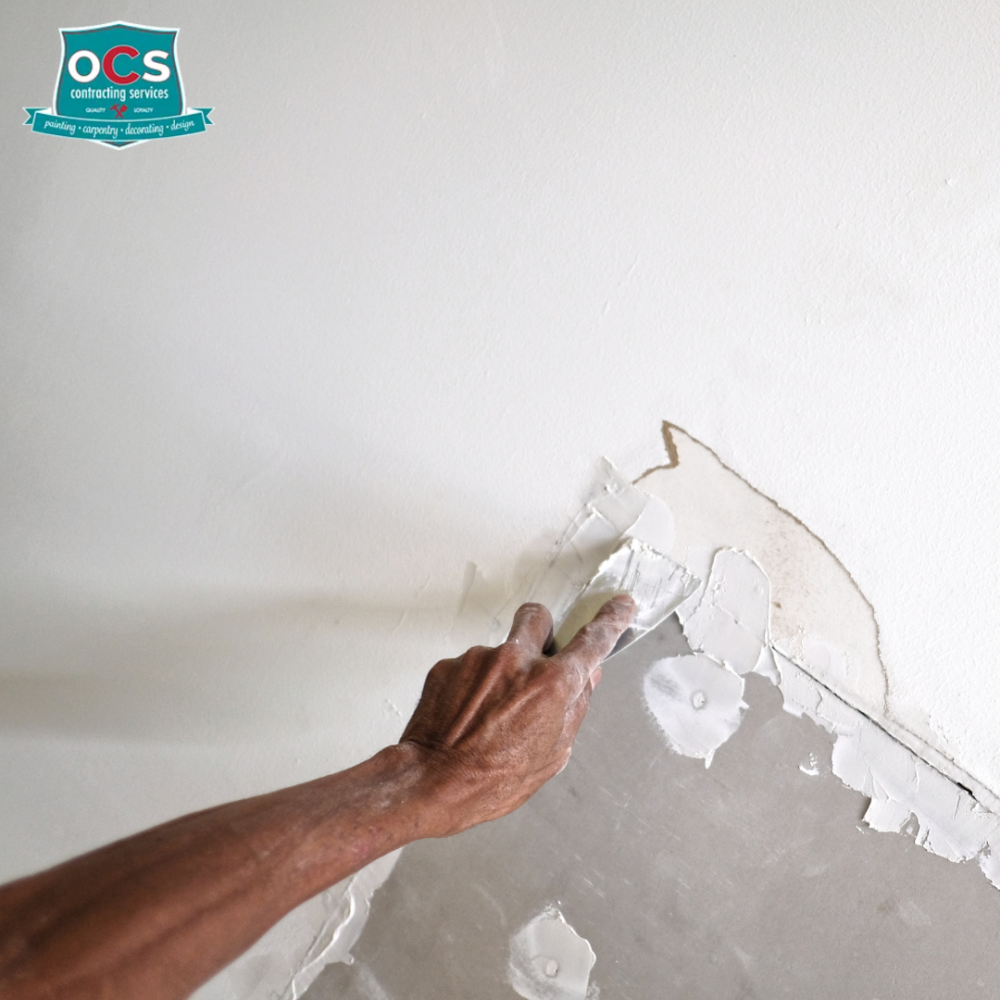
Water damaged drywall does not automatically need to be replaced. If the drywall got wet briefly, dried completely, and is still firm, flat, and intact, a smaller repair may be enough. Replacement becomes more likely when the drywall is soft, swollen, sagging, crumbling, or separating from its paper facing.
For Milwaukee homeowners and property owners, the important question is not whether the water stain can be hidden. It is whether the drywall underneath that stain is still in good enough condition to remain in place.
The water source also needs to be corrected before drywall work begins. Covering a stain before dealing with the moisture can leave the same problem waiting behind a new finish.
When Can Water Damaged Drywall Be Repaired?
A limited drywall repair can make sense when the water exposure was small, caught quickly, and did not change the strength or shape of the drywall.
Imagine a minor plumbing leak that leaves a stain on a kitchen ceiling. After the leak is corrected and the area dries, the ceiling remains flat. The drywall does not feel soft. There is no bubbling paper, sagging section, or loose material.
That is a much different situation from a ceiling that absorbed enough water to bow downward.
A repair may be possible when:
- The drywall is completely dry
- The surface still feels firm
- The board has kept its original shape
- The paper facing is intact
- Seams have not opened or shifted
- Damage is limited to a small area
- There is no visible mold growth on the drywall
The stain itself may still need attention before painting. Water can leave discoloration that shows through a new finish when the surface is not prepared correctly.
OCS provides drywall services that include repair, sheetrock installation, taping, finishing, and several texture options. That makes it possible to address the damaged surface before moving into the final finish.
When Is Replacement the Better Choice?
Drywall should be evaluated for replacement when water has changed the material itself.
Gypsum drywall is porous. Once enough water gets into it, the board can soften and lose its original shape. Drying the room does not necessarily reverse that physical damage.
Watch for areas that:
- Feel soft or spongy when touched
- Sag downward on a ceiling
- Bulge outward from a wall
- Crumble along damaged edges
- Have peeling or separated paper
- Show distorted seams
- Stayed wet for an extended period
- Have visible mold growth
The amount of visible staining is not a reliable measure of the damage. A large stain may come from water traveling across a surface, while a smaller area may have experienced concentrated moisture for much longer.
That distinction is one reason evaluating the drywall itself matters more than judging the project by the stain.
The Location of the Damage Changes the Decision
Water does not behave the same way in every part of a building. A ceiling, basement wall, bathroom wall, and drywall near a window can all show water damage for different reasons.
Ceilings deserve particular attention because soaked drywall can begin to sag under its own weight. A ceiling may also show a stain some distance from the actual leak because water can travel along framing or other materials before reaching the visible surface.
On walls, water may move downward from plumbing, enter around a window or exterior opening, or wick upward from moisture near the floor. The visible edge of the stain may not represent the edge of the affected material.
That means a repair should be based on what is happening at the drywall, not simply the outline of the discoloration.
OCS has completed drywall work following interior water damage, including projects involving walls and ceilings. Homeowners can view examples of our recent projects to see the types of painting and drywall work we handle throughout southeastern Wisconsin.
Why Milwaukee Homes Can Develop Water-Damaged Drywall
Milwaukee’s weather creates several ways for moisture to reach interior surfaces.
Winter snow and ice can expose roof or exterior problems. Freeze-and-thaw cycles can make existing exterior issues more noticeable. Heavy rain can reveal leaks that stay hidden during dry periods. Inside the house, plumbing failures, condensation, bathroom moisture, and basement water can also affect drywall.
The season does not determine whether drywall can be saved. The amount of water, how long the material stayed wet, and what the drywall looks and feels like afterward matter much more.
This is particularly important with an older stain. A mark on a ceiling may be left from a leak that was corrected years ago, or it may be evidence of moisture that is still active. The drywall needs to be dry before deciding what comes next.
Do Not Make Paint the First Fix
Painting over water damage too soon can turn a drywall problem into a painting problem.
If the underlying drywall is still damp or deteriorated, a new coating cannot correct it. A fresh surface may look better temporarily while the damaged board remains underneath.
The sequence should be straightforward:
- Find and correct the water source.
- Allow the affected area to dry.
- Determine whether the drywall is still sound.
- Remove and replace material that cannot remain.
- Repair, tape, finish, and texture the surface as needed.
- Prepare the repaired area for paint.
- Apply the final finish.
That order matters because the finished paint job can only look as good as the wall or ceiling beneath it.
OCS also provides interior painting for walls, ceilings, trim, and other interior surfaces. When drywall and painting are both part of the project, the repair can be taken from damaged surface through final finish without treating those steps as unrelated jobs.
What About Mold on Wet Drywall?
Visible mold changes the situation because drywall is a porous material.
The U.S. Environmental Protection Agency recommends correcting the moisture source and drying water-damaged materials quickly. Its current EPA guidance states that wet or damp areas should generally be dried within 24 to 48 hours to help prevent mold growth.
The EPA also notes that porous materials can sometimes need to be discarded when mold develops because growth can extend into spaces that are difficult to clean completely.
OCS provides drywall and painting services. We do not position mold remediation as one of our listed services. If a water-damage project involves significant mold or contaminated water, that issue may need to be addressed by the appropriate restoration or remediation provider before drywall finishing and painting move forward.
What Happens When Only Part of a Wall or Ceiling Is Damaged?
Water damage does not always require replacing an entire wall or ceiling.
When the affected material is localized, damaged drywall can sometimes be removed back to sound material. New drywall is then fitted into the opening and finished so the repair transitions into the existing surface.
The difficult part is often not installing the new piece. It is making the repaired section disappear visually.
Joint compound has to transition smoothly into the existing drywall. Tape lines and fasteners cannot remain visible. If the surrounding surface has orange peel, knockdown, sand texture, or another finish, the repaired area also needs to work with what is already there.
Light makes those differences easier to spot. A patch that looks smooth straight on may show ridges or uneven edges when daylight or ceiling lights cross the surface from the side.
That is why drywall repair after water damage is partly about removing damaged material and partly about rebuilding the finish around it.
Repair or Replace? Look Past the Stain
The easiest way to think about the decision is to separate cosmetic damage from material damage.
If a dry piece of drywall is firm, flat, and intact but has staining or limited surface damage, repair may be realistic.
If water has left the drywall soft, swollen, sagging, deteriorated, or mold-affected, replacement of the affected section becomes more likely.
A brown mark cannot answer that question by itself.
For property owners, that distinction can prevent two opposite mistakes. You do not want to remove sound drywall unnecessarily, but you also do not want to spend time finishing and painting material that has already lost its integrity.
Restore Water Damaged Drywall in Your Milwaukee Property
Water damaged drywall should be repaired or replaced based on the condition of the material, not simply the size or color of the stain. Dry, firm drywall may be repairable. Soft, sagging, swollen, crumbling, or otherwise deteriorated drywall may need to come out before the surface can be properly finished.
OCS Contracting Services handles drywall repair and installation for residential, commercial, and industrial properties in the Milwaukee area and throughout southeastern Wisconsin. Our drywall work includes sheetrock installation, taping, finishing, corner bead, ceilings, arches, and multiple texture options.
If water has left a wall or ceiling damaged after the source has been corrected, contact OCS Contracting Services for an estimate. We can determine what drywall work is needed and take the surface from damaged material to a clean, finished result.